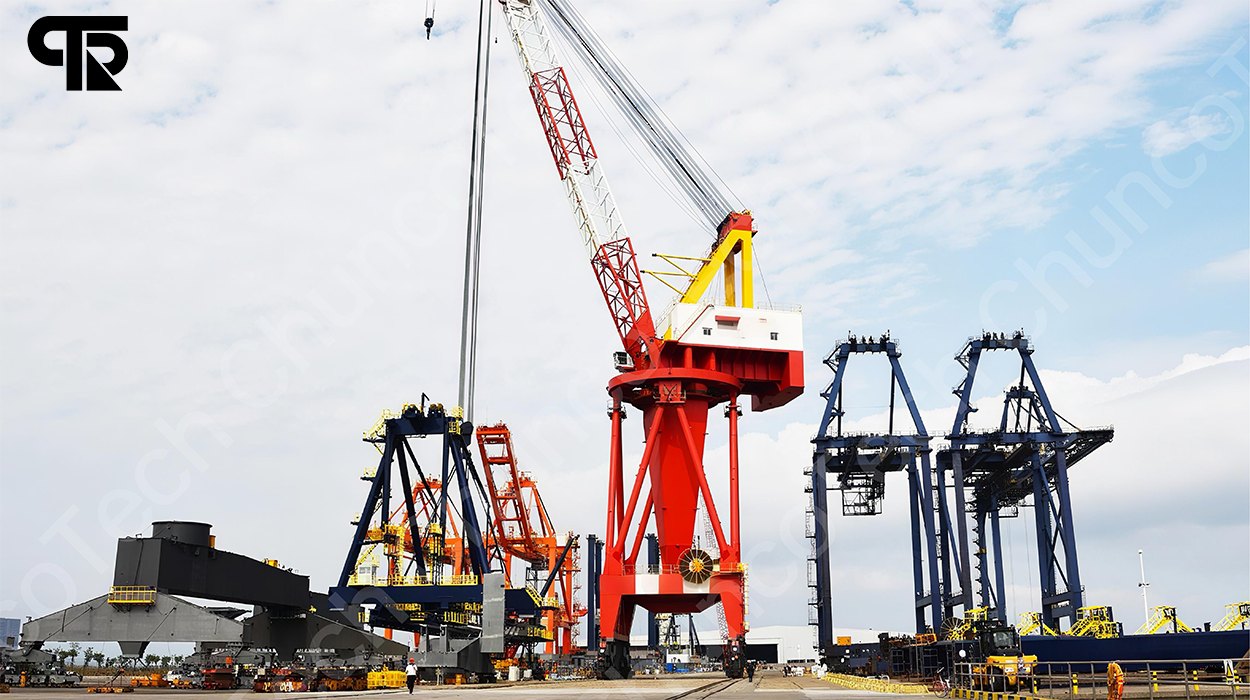
Choosing among a derrick, the choice often focuses on pivoting arm versus fixed jib. Rigid lifts deliver user-friendliness and are suitable for plumb lifts, but variflex arms deliver heightened maneuverability, empowering access to limited spaces. Assess the worksite; if you’re largely facing limitations or oblige more intricate positioning, a articulated crane is generally the wiser option. However, for open-air areas and rudimentary lifts, a telescopic arm might be a larger economical choice.
Knowing Tough Craning Arm Cranes: Uses and Gains
Robust lifting arm lifters represent a tailored type of uphoisting equipment, developed for heavy load handling in challenging settings. Their chief trait is a firm crane arm framework, which facilitates for correct positioning and advanced equilibrium, especially when running in cramped spaces or at major heights. Common implementations consist of bridge assembly, fabrication operations, power area placement, and public works development. The paramount positive aspects constitute increased welfare, boosted effectiveness, and the capability to achieve tasks that would be unrealizable with customary apparatus. This leads to decreased expenses and refined assignment consequences.
STS Cranes: The Masters of Seaside Container Operations
Modern massive STS jibs represent the peak of engineering success in the maritime industry. Designed to promptly load and offload containers between ships and the harbor, they are important for the uninterrupted operation of modern ports. Their dimension – often exceeding a hundred meters – and extraordinary load ability allow them to handle the biggest container freighters currently in deployment, fundamentally shaping global transactions.
Knuckle Boom Cranes: Multifunctionality in Lifting Jobsites
Knuckle boom loaders are famous for their exceptional elasticity, providing machinists with a unique advantage in extensive hoisting chores. Possessing a curving boom component, these mighty hoists can access around hindrances and set objects in narrow places. This power makes them advantageous for purposes in development, handling, supplies duties, and abundant other divisions. Finally, knuckle boom equipment offer a important choice to challenging handling criteria.
Straight Boom Cranes: Correctness and Constancy Described
Rigid lifting boom machines are famous for their superior capacity to deliver correct lifting and arrangement of loads. In contrast to collapsible models, their easy design produces built-in constancy, making them ideal for uses requiring major magnitudes of supervision and reduced oscillation. This attribute is eminently indispensable in building sites and areas where severe tolerances are obligatory.
Hard Boom Device Advantages: As Firmness Is Concerned
Usual craning arm lifters often face challenges with bending, especially when lifting large objects or running at major extents. Nonetheless, solid jib arm apparatus produce a clear gain by cutting unfavorable jolting. This strengthened security produces to secure executions, amplified definiteness, and a curtailed probability of freight movement. Hence, heavy-duty cranes are best for applications where systematic resilience is important.
Jetty Cranes: Certain Insightful Study into STS Mechanisms
Such dockside lifter system represents particular important component among modern freight ports. These quay handlers are intricate devices assembled to rapidly move cargo removed from gigantic seagoing ships by harbor systems. Their execution entails accuracy making and coordinated control to sustain reliability and optimize productivity.
Reviewing Crane Models: Folding, Direct, Heavy-Duty, and Ship-to-Shore
Settling on the correct hoisting equipment for a distinguished application is imperative. While many alternatives exist, four usual models – variflex cranes, rigid cranes, stiff cranes, and harbor cranes – represent significantly divergent features. Segmented cranes offer remarkable maneuverability due to their folded part, making them suitable for narrow localities. Rigid cranes present adaptable coverage through their adjustable part, perfect for extensive raising demands. Strong cranes maintain a erect division, best for meticulous positions where rigidity is crucial. Finally, Pier cranes, built for package logistics at docks, come with immense hoisting force and great reach.
- Folding Loader Styles
- Straight Hoisting Forms
- Robust Apparatus Varieties
- Dockside Handler Styles
The Development Pertaining to STS Cranes: Directions and Refinements
Throughout recent periods, STS (Ship-to-Shore) crane mechanics has undergone a substantial progression, caused by demands for greater port performance. Early STS cranes were moderately simple constructions, applying basic performing mechanisms. Now, contemporary STS cranes incorporate sophisticated automation, including state-of-the-art control systems, adaptive positioning abilities, and augmented safety standards. A key movement is the inclusion of electrically driven propulsion, curbing discharges and elevating operational endurance. Also, the rise advancement digitally controlled operation and automated maintenance are evolving the territory associated with STS crane use. The expectation sees enduring priority on fuel optimization and the creation of even taller cranes to accommodate constantly bigger container boats.
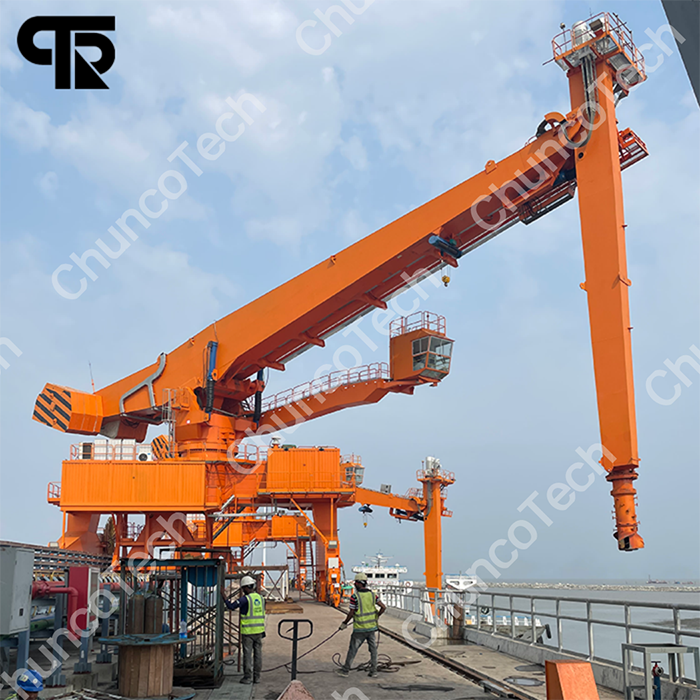 Stiff Boom Crane